
Articles
Choa Chu Kang
7 May 2026
Topic
Society
Subtopic
Biodiversity and nature
Heritage
Places
A glimpse into the town that has managed to retain its agricultural, industrial and military roots, even as the trains keep moving.
To most Singaporeans, it’s just ‘CCK,’ a familiar blur of red and white bricks on the North-South line (aka the ‘red line’). But slow down, and the blurred vision sharpens into layers of Choa Chu Kang’s agricultural, industrial and military roots.
The name itself is a Teochew heirloom, tracing the area back to a 19th-century river settlement. Plantations were then governed by a ‘kang chu’ (港主), which means ‘master of the riverbank’. Because the Choa clan were the first to drop anchor and head the settlement here, the area was named Choa Chu Kang. By 1898, this sprawling expanse teemed with gambier and pepper plantation. Forest clearing for roads and crops drove away the resident tigers’ prey, leading to a decade of terror where nearly 200 villagers were killed each year. The government eventually placed a $150 bounty on the animals, a small fortune at the time. The campaign ended in October 1930, when the last wild tiger in Singapore was shot in Choa Chu Kang Village, restoring a sense of hard-won peace to the settlers.
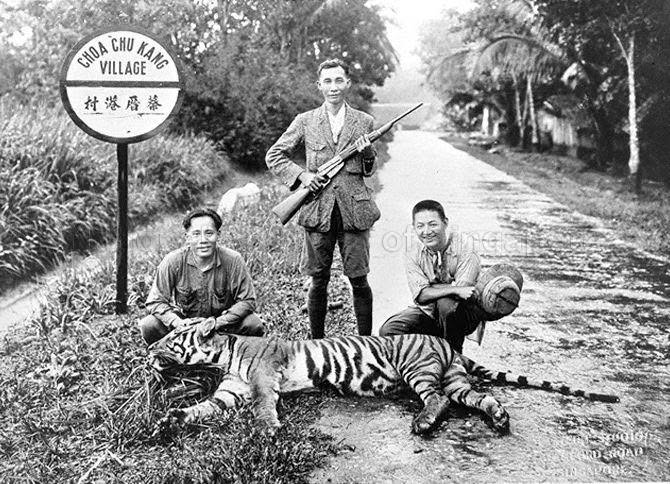
(From left) Straits Hunting Party vice-president Tan Tian Quee, successful shooter Ong Kim Hong and president Low Peng Hoe, after the last wild tiger in Singapore was shot dead in Choa Chu Kang Village in October 1930. Photo: Tan Tuan Khoon Collection, courtesy of National Archives of Singapore
By 1939, the roar of tigers was replaced by the roar of engines. The Royal Air Force (RAF) Tengah was established as the British’s primary airbase in the Far East. Even now, for some residents waking up in their newly Built-to-Order (BTO) flat in Tengah, the thunder of fighter jets overhead remains a 90-year-old legacy that echoes until today.
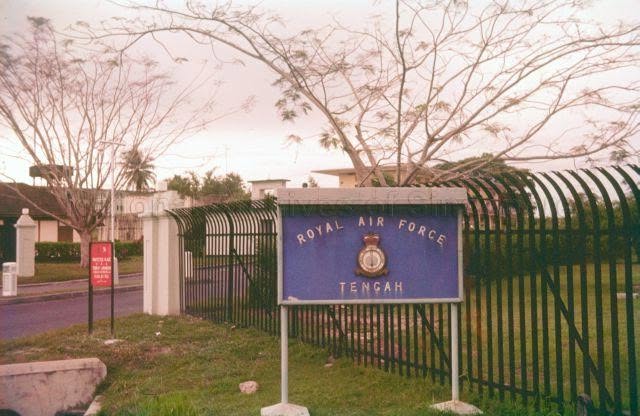
RAF Tengah Airbase. Photo: John C Young Collection, courtesy of National Archives of Singapore
When National Service was introduced in 1967, the town became the backdrop for many Singaporeans’ rite of passage. Formerly a British Ordnance Base, Keat Hong Camp became the SAF General Supply Base, where many enlistees would collect their uniforms, boots, and duffel bags, marking their first National Service experience.
Even as camo and concrete give way to communities, Choa Chu Kang continues to breathe life. When Keat Hong Camps I & II were decommissioned in 2012, elements of their military soul were kept alive in the new neighbourhoods. Today, miniature military vehicles sit in playgrounds as intentional ‘Easter egg’ conversation starters, where servicemen and women can share National Service stories while their children play.
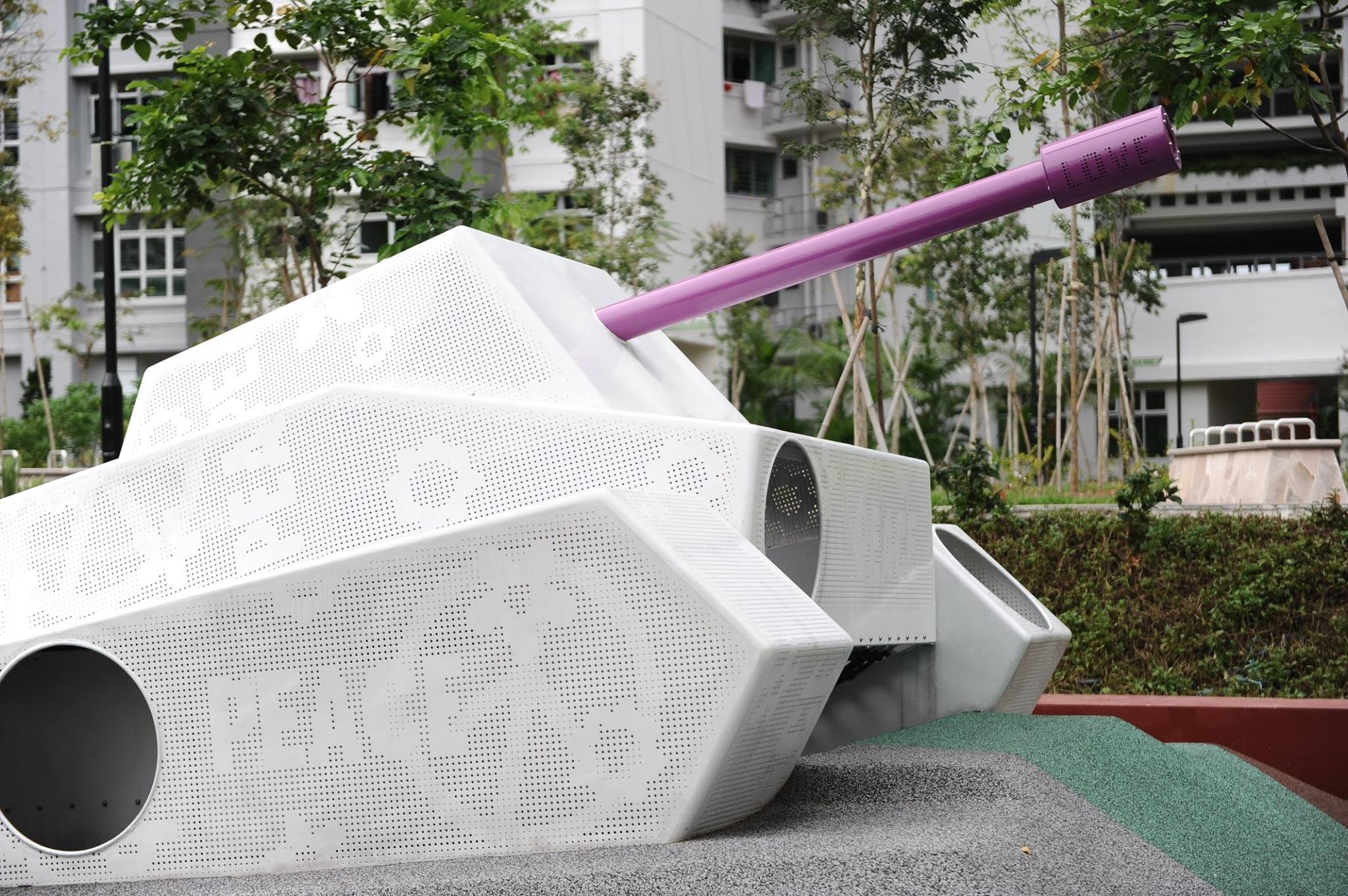
Military-themed playground at Keat Hong Garden. Photo: Housing & Development Board (HDB)
Nearby, in front of Block 488C Choa Chu Kang Avenue 5, a massive Silk-Cotton (kapok) tree stands as a living sentinel. Spared from the bulldozer during the camp’s redevelopment, it continues to blanket the pavement with its white, cloud-like ‘fluff’.
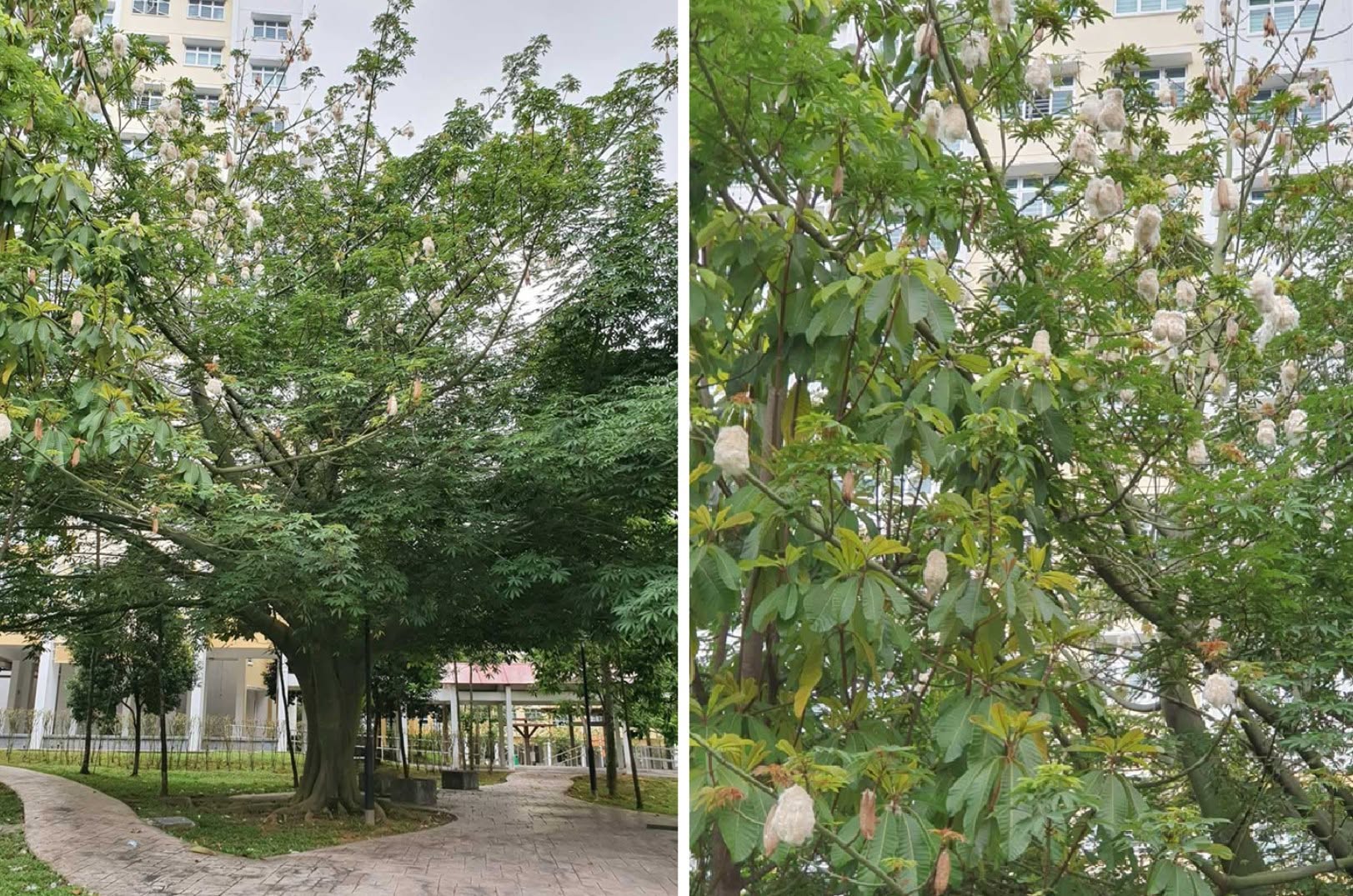
(Left) The Silk-Cotton (kapok) tree in front of Block 488C, Choa Chu Kang Avenue 5; (Right) A close-up look at the kapok fruits. Their fine, soft, and waterproof floss was historically used to fill life jackets, pillows, and mattresses. Photos: Chua Chu Kang Town Council
Choa Chu Kang may comprise seven neighbourhoods, including Keat Hong, Yew Tee, and Teck Whye, but it is unified by a rich history told today through a variety of heritage elements. Whether it’s the nostalgic plantation motifs on building facades or design elements relating to its military history, Choa Chu Kang is an example of how we have grown while honouring our past.
So, the next time you’re commuting on the ‘red line’, look up from your screen to catch a glimpse of a town that has managed to retain its roots, even as the trains keep moving.
For more bite-sized content, follow ConnexionSG on Facebook (opens in new tab), Instagram (opens in new tab), and Tiktok (opens in new tab).